40+
Years Of Experience
Cut Tall Grass and Light Brush Across Open Land
AG Building & Excavation LLC provides brush hogging services for pasture and acreage maintenance in Anson, Texas.
When your pasture in Anson has grown waist-high with Johnson grass, ragweed, or volunteer saplings that make it difficult to move livestock or inspect fence lines, brush hogging cuts the vegetation down to a manageable height. The rotary cutter handles rougher growth than a standard mower and works across uneven terrain without getting clogged or damaged by rocks and debris. AG Building & Excavation LLC operates equipment designed for the conditions common on agricultural properties throughout Anson and the surrounding area.
Brush hogging does not grind vegetation into mulch or remove roots, but it clears the top growth so your property looks maintained and remains accessible for cattle, equipment, or future development. The service is used routinely by landowners who need to keep pastures open, maintain fire breaks, or prepare undeveloped acreage for fencing or grading work. It works on both small residential lots and larger tracts that have been left unmanaged for a season or more.
If your land in Anson needs clearing and you want to avoid hand tools or burn piles, reach out to schedule a site visit.
What Happens During Brush Hogging Work
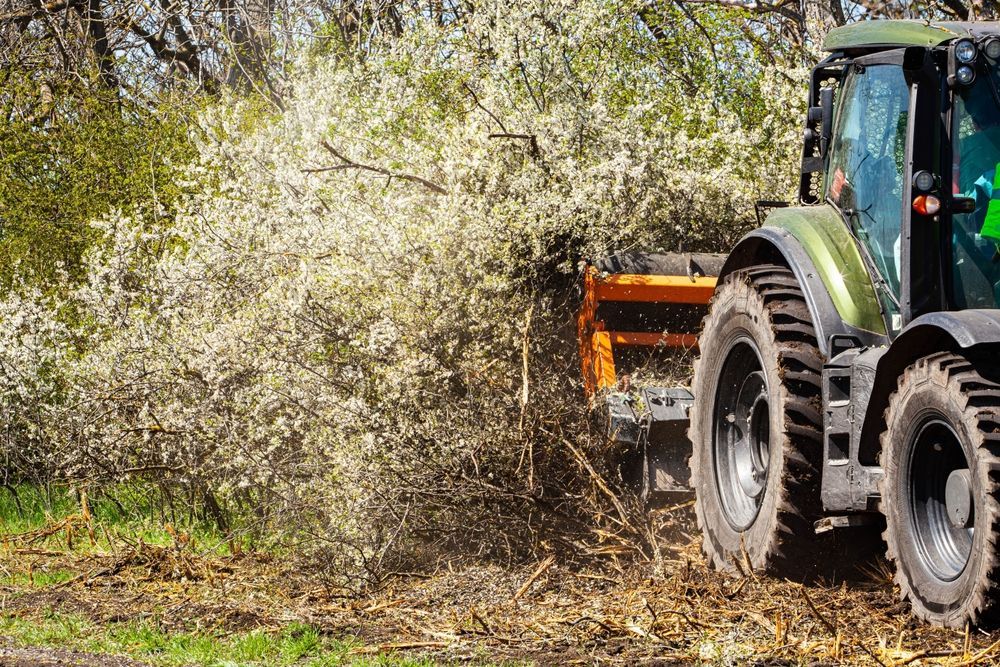
The tractor-mounted rotary cutter moves through your property in Anson, slicing through tall grass, weeds, and woody stems up to a few inches thick. The blades spin on a horizontal plane and discharge the cut material to the side or rear, leaving it on the ground to decompose. You do not need to rake or haul the clippings unless they interfere with specific uses like hay production or livestock grazing on sensitive forage.
After the work is complete, you will see a field cut down to a uniform height, typically between four and six inches depending on ground conditions. The cleared area is easier to walk across, safer for equipment operation, and less likely to harbor ticks or snakes during warm months. If you plan to seed or fertilize, the shorter vegetation allows better contact with the soil and improves germination rates.
Brush hogging works best on properties with relatively open terrain and scattered brush rather than dense thickets or mature trees. It does not remove stumps, roots, or large rocks, and repeated passes may be necessary if regrowth is aggressive. If your land has deep ruts, standing water, or heavy mesquite, other clearing methods may be more appropriate depending on your long-term maintenance plan.
What Landowners Want to Know Before Scheduling
Most property owners have questions about how often they need to schedule hogging, what the equipment can handle, and whether the service will damage existing features like irrigation lines or young trees.
AG Building & Excavation LLC has maintained pastures and rural properties throughout Anson and nearby communities, helping landowners keep acreage accessible and reducing fire hazards during dry periods. If you need routine or one-time brush hogging, contact the team to discuss your property size and schedule a service visit.